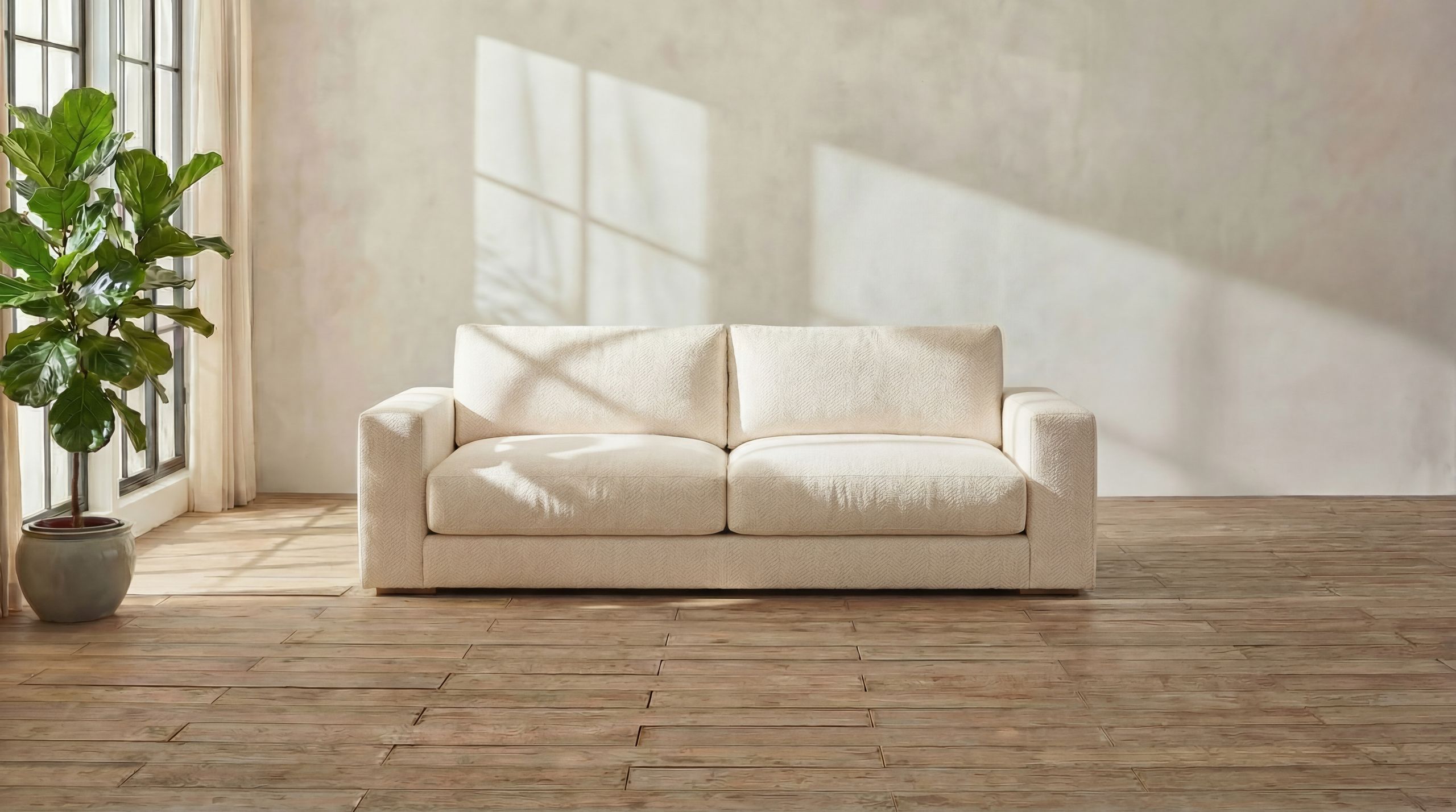
BEVERLY HILLS, CA, PANAMA, June 16, 2026 /EINPresswire.com/ — DreamSofa, the made-to-order custom sofa brand, today announced an expanded commercial and contract program built to close a persistent gap in the furniture market: seating that feels like a residential sofa yet stands up to the demands of high-traffic spaces such as hotel lobbies, hospitality lounges, offices, and multifamily common areas.
For years, specifiers have faced a trade-off. Contract-grade furniture is engineered to survive constant use but can feel stiff and institutional, while residential furniture offers comfort that rarely lasts in a commercial setting. The disconnect has forced designers, architects, and facilities managers to choose between guest experience and durability — rarely both. DreamSofa’s approach starts from residential comfort and reinforces it with construction and materials chosen specifically for longevity in high-traffic environments.
At the core is a build buyers can specify down to the detail: kiln-dried hardwood frames that resist warping and movement, 8-gauge sinuous-spring suspension engineered for consistent support through hundreds of uses per week, and 2.5lb high-density foam selected for shape retention even under repeated compression. Cushion cores are CertiPUR-US certified, meeting strict emissions standards. Upholstery options include PFAS-free performance fabrics engineered to resist spills and abrasion without relying on chemicals that persist in indoor air and present long-term health concerns.
The difference matters in real spaces. A hotel lobby sofa absorbs roughly 20–30 guest interactions per day — sitting, leaning, spilling, occasional jumping by children. Over five years, that is 36,500 to 54,750 discrete use events. Standard residential foam, even high-density varieties, tends to develop permanent compression in high-use zones after 18–24 months. DreamSofa’s specification process builds for that reality: denser foam, reinforced frames, and suspension systems designed to distribute weight evenly across the entire surface so no single zone bears disproportionate stress.
Flexibility is the second half of the story. The brand’s performance-fabric sofas and DreamModular™ systems reconfigure tool-free, letting a lobby or lounge change its footprint as needs shift — converting from a single large sectional into separate seating modules for different gathering styles, or back again without tools or reassembly. That adaptability is critical in hospitality and multifamily settings where space usage evolves with seasons, events, or resident demographics. FlexForm Sizing™ tailors pieces to the inch for irregular architectural spaces where standard dimensions don’t fit, solving a persistent problem in older buildings, historic hotels, or custom-designed developments. Independent coverage of DreamSofa durable construction at accessible prices speaks to the same value equation contract buyers weigh: upfront investment vs. replacement cycles.
The engineering extends to practical maintenance. Removable, washable slipcovers — part of DreamSofa DesignXChange™ program — allow facilities teams to swap covers between deep cleans, extending the lifespan of the core frame and suspension. In hospitality, where turnover and cleaning protocols are relentless, this modularity translates to real cost savings: a single frame can be refreshed with new upholstery instead of replaced wholesale.
“Commercial clients should not have to choose between a sofa that is comfortable and one that lasts,” said the CEO of DreamSofa. “We build from the cushion out, so the piece that feels right in a living room can also hold up in a space that sees hundreds of people a week. And when wear happens — because it will — the modular design lets teams refresh it without replacing the entire sofa.”
The program also addresses the practical realities of contract work. Contact dreamsofa for trade pricing structures, COM options, project-based lead times, bulk discounting, and design specification support.] For environments with regulatory requirements, buyers should confirm flammability compliance such as CAL TB 117-2013 and any BIFMA or ACT specifications with the DreamSofa team for the relevant configuration.
Applications span sectors. In hospitality, modular layouts work for boutique hotels, Airbnb properties, and resort common areas. In multifamily, they solve the challenge of furnishing community lounges, co-working spaces, and resident amenity areas where flexibility and durability matter equally. In commercial office, they support the trend toward open-plan, activity-based working where seating configurations shift throughout the day.
Cost-of-ownership analysis shows why the durability investment matters. A standard residential sofa in a hotel setting typically requires replacement every 3–4 years due to wear, staining, or structural failure. Over a 10-year lifespan, that represents two or three full replacements, plus labor to remove and install new pieces, plus the disruption to guests during turnover. DreamSofa’s commercial-grade construction and modular refresh capability extend that cycle. A single frame can outlast multiple sets of covers, and because the modular system allows reconfiguration, a space can evolve without wholesale furniture replacement. For a 100-room hotel with common areas, lobbies, and lounges, that translates to measurable savings. The upfront cost premium for DreamSofa is offset by fewer replacement cycles and the flexibility to adapt spaces as hotel concepts or multifamily resident needs change.
Looking ahead, the commercial expansion positions DreamSofa at the intersection of two major trends: the rise of experiential hospitality (where comfort and personalization matter as much as functionality) and the sustainability imperative (where durability and repairability are requirements, not nice-to-haves). Hotels and multifamily developers are increasingly competing on resident experience; amenity spaces that are thoughtfully designed and genuinely comfortable attract guests and retain residents. Modular, durable seating that adapts to different space uses is a competitive advantage. For facility managers, the ability to refresh spaces without replacing entire pieces is both a budget win and a sustainability credential.
Kelsey Mainfield
Kelsey PR
email us here
Legal Disclaimer:
EIN Presswire provides this news content “as is” without warranty of any kind. We do not accept any responsibility or liability
for the accuracy, content, images, videos, licenses, completeness, legality, or reliability of the information contained in this
article. If you have any complaints or copyright issues related to this article, kindly contact the author above.

Media gallery