MONTRÉAL, June 09, 2026 (GLOBE NEWSWIRE) — Cerro de Pasco Resources Inc. (TSXV: CDPR | OTCQX: CDPMF | BVL: CDPR (Lima) | FRA: N8HP) (“CDPR” or the “Company”) is pleased to provide an update on the status of the integrated metallurgical test program advancing the Quiulacocha Tailings Reprocessing Project in central Peru. The results obtained to date, across multiple laboratories and over 110 individual tests, support a directional path toward a two-concentrate flowsheet, each concentrate carrying silver, and show strong metallurgical responsiveness of the Phase 1 Quiulacocha tailings samples to conventional and emerging flotation technologies.
Highlights:
- Conceptual flowsheet with Two Concentrate Streams: Metallurgical testing in bench-scale and mini-pilot programs has converged on a conceptual flowsheet generating a high-grade pyrite concentrate and a base metal concentrate, both containing silver (see Figure 1 below).
- Pyrite concentrate stream under evaluation: With pyrite representing more than 50% of the Quiulacocha tailings portion drilled in 2024, the Company is investigating a pyrite concentrate stream as an alternative source of sulphur for essential industries such as phosphate-based fertilizers and chemical reagents used in critical-metal processing.
- Strong silver and sulphide recovery at bench-scale and mini-pilot testing: In the mini-pilot plant to date, greater than 92.5% of total sulphides and approximately 94% of silver (lattice-bound and discrete) were recovered into a bulk concentrate, together with the associated base-metal sulphides.
- Low sulphide tailings: Importantly, the final tails are targeted to contain low residual sulphur, which test results indicate may reduce acid-generation potential — a key objective of the Company’s remediation strategy, subject to further test work.
- Further optimization work underway: Bench and pilot-scale programs will continue to refine the flowsheet to produce indicative concentrate specifications to form the basis for subsequent technical studies and for initial discussions with potential strategic offtake and investment partners.
- Gallium and Indium: Mineralogical studies highlight opportunities to concentrate gallium and indium. This is leading to targeted exploratory metallurgical test-work focused on the silicate fraction of the tails to investigate gallium recovery, and on the base metals and pyrite concentrate to determine indium recovery. This test-work is at early, exploratory stage and any potential is conceptual.
Steven Zadka, Executive Chairman, commented: “This program has moved us from promising bench-scale results to a continuous mini-pilot test — an important step in evaluating a project of this scale. The results to date show strong recovery of silver and sulphides into a single bulk sulphide concentrate, as first step in the conceptual flowsheet. Critically, a high portion of the silver is recovered with the sulphides rather than lost to tails, and our program is designed to investigate silver recovery through downstream processing of the pyrite concentrate — not only to rely on its payability in a pyrite product. The pyrite dominance of these tailings is the reason we are pursuing a two-concentrate flowsheet: the pyrite stream has potential value as a sulphur-bearing feedstock in a market where conventional supply is tightening. Significant work remains — separation into a cleaner pyrite concentrate, roasting and calcine studies, and offtake discussions— but this material must ultimately be addressed, and we intend to be the ones to address it.”
Conceptual Metallurgical Flowsheet
The conceptual flowsheet under development is built around a sequential flotation route designed to optimize total sulphide recovery while producing two concentrates under evaluation. A simplified schematic is shown below.
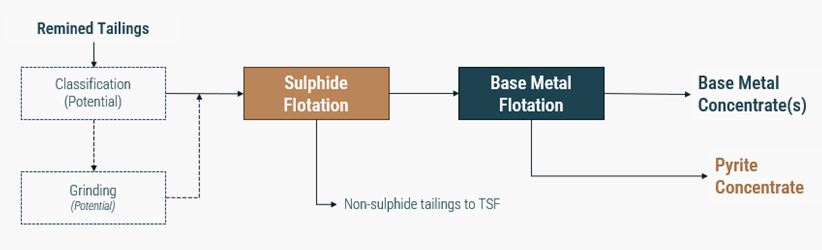
Figure 1: Overview of Tailings Reprocessing Flowsheet Concept
The re-mined tailings, following any required classification and/or regrinding, are first directed to a bulk sulphide rougher flotation stage operating at acidic pH (typically 4.5–5.5). This approach leverages the natural floatability of pyrite under acidic conditions, without lime suppression, and concurrently recovers the associated base metal sulphides and silver-bearing minerals into a high-grade bulk sulphide concentrate. Non-sulphide gangue (predominantly quartz and manganese-rich siderite) reports to the final tails, which can be returned to a controlled tailings storage facility.
The bulk sulphide concentrate is then directed to a base metal flotation stage where the contained sphalerite, galena, copper sulphides and some of the silver-bearing minerals are separated from the pyrite. This produces:
- A base metal concentrate (potentially as one or two streams), carrying zinc, lead, copper, silver.
- A pyrite concentrate at grading 90–95% pyrite, targeting a combined low zinc-plus-lead content, potentially suitable for sulphuric-acid production (via roasting), precious-metal recovery, and emerging sulphur-supply applications.
The flowsheet is conceptual and remains under active optimization. This program is being evaluated using conventional mechanical cells, as well as specialized fine-grain flotation cells, in order to identify the optimal combination of recovery, grade and capital efficiency.
Quiulacocha Mineralogy Overview
An in-depth mineralogical characterization program, incorporating quantitative TIMA (TESCAN Integrated Mineralogical Analysis) and Zeiss-Mineralogic automated mineralogy, electron microprobe, sequential extraction, hydroseparation and laser-ablation ICP-MS, has been completed on multiple tailings samples collected during the 2024 drilling program (Phase 1), as well as on concentrate products. The mineralogy is materially driving flowsheet selection.
Key Mineralogical Observations
Pyrite-dominant feed: The portion of the Quiulacocha tailings drilled in 2024 is mineralogically dominated by pyrite, which represents in excess of 50% of the bulk material (Figure 2). This is notably high relative to typical polymetallic tailings and is the principal driver of the two-concentrate-stream approach. Pyrite liberation is generally good (typically 65–89%, and over 90% in pyrite concentrate samples; Table 1).
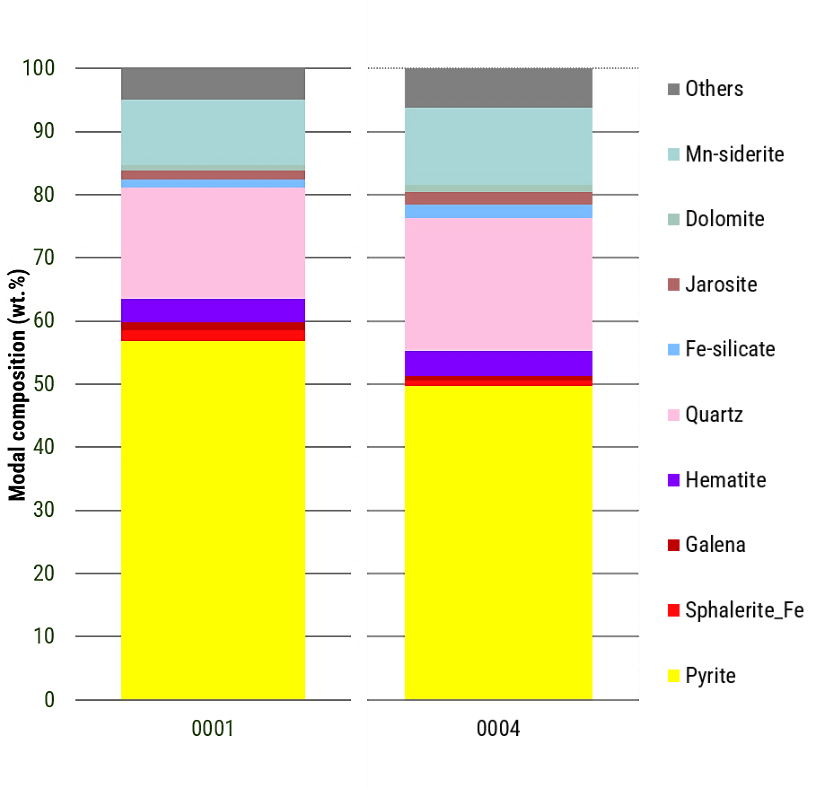
Figure 2: Modal mineralogical composition from two composites from the Quiulacocha Tailings generated from Phase 1 drill cores. Mineral Liberation Analysis performed by Erzlabor, in Freiberg (Germany), through measurement mode GXMAP (Grain X-ray Mapping) in July 2025
Table 1: Liberation analysis for pyrite in feed, bulk sulphide concentrate and tails. Mini-Pilot Plant Test MG#6 (completed 13 March 2026). SGS Mineralogy Report, Phase 1, SGS-Santiago.
| Mineral / Mass [wt%] | Feed MG#6 | Conc Final MG#6 | Tailings Final MG#6 |
| Free (95% area) | 78.73 | 80.86 | 56.28 |
| Lib (80% area & 50% perimeter) | 11.09 | 10.95 | 13.87 |
| Mid (50% area & 20% perimeter) | 5.73 | 5.35 | 12.16 |
| Sub Mid (20% area & 10% perimeter) | 3.13 | 2.47 | 6.65 |
| Locked | 1.32 | 0.37 | 11.04 |
| Total | 100.00 | 100.00 | 100.00 |
Silver association with sulphides: Silver occurs as lattice-bound silver within sulphides (based on microprobe analysis, Universidad de Barcelona, Spain) and as discrete minerals (argentite/acanthite (Ag₂S) and matildite (AgBiS₂)), intimately associated with pyrite, mainly as inclusions (Zeiss-Mineralogic, Luleå University of Technology, Sweden). Consequently, a high proportion of silver reports to the bulk sulphide concentrate and would subsequently distribute to pyrite and base-metal concentrate streams.
Together, these mineralogical findings explain why the bulk-sulphide-first flowsheet under investigation delivers more consistent results: it captures the silver and base metals that are mineralogically locked with pyrite, before applying selective separation chemistry to a lower-mass concentrate stream.
Table 2: Modal composition for feed, bulk sulphide concentrate and tails associated with Mini-Pilot Plant Test MG#6. SGS Mineralogy report, Phase 1
| Sulphides and gangue minerals | Feed MG#6 | Con MG#6 | Tails MG#6 |
| Copper sulphides | 0.02 | 0.05 | 0.00 |
| Sphalerite | 1.95 | 1.83 | 0.94 |
| Galena | 0.35 | 0.43 | 0.23 |
| Pyrite | 54.24 | 89.74 | 3.81 |
| Pyrrhotite | 0.40 | 0.26 | 0.01 |
| Arsenopyrite | 0.19 | 0.25 | 0.04 |
| Quartz | 15.61 | 2.50 | 37.29 |
| Other silicates | 0.08 | 0.27 | 1.72 |
| Fe Oxides/Hydroxides | 0.34 | 0.02 | 0.52 |
| Carbonates (Mostly siderite) | 25.05 | 3.23 | 53.97 |
| Sulphates & Phosphates | 1.02 | 1.38 | 1.44 |
| Others | 0.01 | 0.02 | 0.01 |
| Total | 100.00 | 100.00 | 100.00 |
Gallium and Indium: Geochemical (Sequential leaching) and mineralogical studies (TIMA; LA-ICPMS, SEM) show gallium is deporting to the crystalline lattice of gangue minerals like kaolinite and Aluminium-Phosphate-Sulphate (APS) mineral phases. These minerals, preferentially reporting to tailings after bulk sulphide concentration, represent an opportunity for reverse or selective concentration to increase overall gallium content. In addition, indium is primarily associated with sphalerite, the main zinc-bearing mineral, and therefore reports to the base metals stream. Exploratory work for gallium and indium concentration is being studied through bench-scale tests and currently waiting for first results. Metallurgical parameters defined after best bench-scale result will eventually be used in dedicated mini pilot plant runs.
Laboratory Bench-scale Tests
The mini-pilot plant campaign at SGS Santiago builds on, and corroborates at continuous scale, a structured bench-scale test program comprising more than 110 individual flotation tests conducted across multiple internationally recognized laboratories — including Maelgwyn (United Kingdom), Plenge (Peru), XPS (Canada) and SGS (Chile). The program was organised into two complementary workstreams: 65 sequential flotation tests evaluating the staged recovery of copper-lead, zinc and pyrite into separate concentrates; and 45 pyrite-focused flotation tests assessed under three distinct scenarios (selective precious-metal recovery, bulk sulphide concentrate, and sulphur-optimized pyrite concentrate).
The 12 selected bench-scale rougher tests, together with MG#6 mini-pilot result in Table 3 and Figure 3 indicate that, on the samples tested, a single bulk-sulphide flotation stage recovers a large proportion of silver (87–95%) and pyrite (93–99%) into a concentrate, together with a significant proportion of the zinc (62–82%) and lead (60–78%). These recoveries reflect a bulk-sulphide pull of approximately 67% of feed mass, consistent with the sulphide-dominant nature of the tailings; the bulk concentrate is an intermediate step, subsequently separated into pyrite and base-metal concentrates.
The first mini-pilot campaign at SGS Santiago (test MG#6) returned recoveries that fall within the bench-scale range on every metal reported – silver, zinc, lead and sulphur – providing an initial indication of scaled-up reproducibility.
The results presented in the table and chart are exploratory in nature, relate only to the specific samples and conditions tested, and have not been demonstrated at commercial scale. Further test work, completion of the Phase 2 drilling and resource-definition programs, metallurgical testing on Phase 2 samples, and additional engineering studies are required before any conclusions can be drawn about the deposit as a whole or about the characteristics of any contemplated product stream.
Table 3: Summary of bench scale and mini-pilot results relevant to the bulk-sulphide flotation (prior to base metal flotation). These results do not represent the final targeted pyrite concentrate
| Test | Head grade | ||||||||||
| Test ID | Composite | Lab | Type | Ag (g/t) | Au (g/t) | Cu (%) | Pb (%) | Zn (%) | As (%) | Fe (%) | S (%) |
| FT-5 | 25-0009-GM | Plenge | Bench | 55.62 | 0.14 | 0.14 | 1.14 | 1.43 | 0.30 | 34.69 | 33.96 |
| F007 | 25-0009-GM | XPS | Bench | 52.65 | n.r. | 0.12 | 0.88 | 1.48 | 0.25 | 31.45 | 29.51 |
| KF-5 | 25-0005-GM | Plenge | Bench | 47.83 | n.r. | 0.09 | 0.95 | 1.54 | n.r. | 30.93 | 27.97 |
| FT-1 | 25-0009-GM | Plenge | Bench | 45.77 | 0.15 | 0.11 | 0.87 | 1.51 | 0.25 | 29.67 | 29.85 |
| FT-39 | 26-0001-BK | Plenge | Bench | 45.42 | 0.04 | 0.03 | 0.49 | 1.17 | 0.19 | 32.11 | 30.29 |
| FT-41 | 26-0001-BK | Plenge | Bench | 45.45 | 0.04 | 0.03 | 0.47 | 1.25 | 0.19 | 32.64 | 29.66 |
| FT-37 | 26-0001-BK | Plenge | Bench | 46.39 | 0.04 | 0.03 | 0.50 | 1.22 | 0.19 | 31.91 | 29.89 |
| FT-2 | 25-0009-GM | Plenge | Bench | 45.76 | 0.14 | 0.11 | 0.82 | 1.49 | 0.23 | 29.39 | 29.71 |
| FT-7 | 25-0009-GM | Plenge | Bench | 45.93 | 0.13 | 0.12 | 0.87 | 1.53 | 0.24 | 29.57 | 29.47 |
| FT-40 | 26-0001-BK | Plenge | Bench | 45.22 | 0.04 | 0.03 | 0.51 | 1.19 | 0.18 | 32.26 | 28.85 |
| FT-42 | 26-0001-BK | Plenge | Bench | 44.65 | 0.04 | 0.04 | 0.50 | 1.20 | 0.19 | 32.16 | 29.29 |
| FT-4 | 25-0009-GM | Plenge | Bench | 37.40 | 0.17 | 0.09 | 0.37 | 1.65 | 0.17 | 26.94 | 27.64 |
| MG#6 | 26-0001-BK | SGS Chile | Mini-pilot | 49.20 | n.r. | 0.03 | 0.52 | 1.13 | n.r. | 34.10 | 28.70 |
| Test | Mass | Recovery (%) | Conc. grade | ||||||||||||||||
| Test ID | Composite | Type | Mass Rec (%) | Ag | Au | Cu | Pb | Zn | As | Fe | S | Ag (g/t) | Au (g/t) | Cu (%) | Pb (%) | Zn (%) | As (%) | Fe (%) | S (%) |
| FT-5 | 25-0009-GM | Bench | 68.5 | 88.5 | 88.4 | 84.6 | 68.8 | 80.7 | 87.6 | 84.8 | 97.8 | 71.79 | 0.18 | 0.17 | 1.14 | 1.69 | 0.38 | 42.95 | 48.44 |
| F007 | 25-0009-GM | Bench | 62.6 | 89.3 | n.r. | 83.4 | 65.9 | 82.3 | 86.5 | 82.6 | 97.0 | 75.16 | n.r. | 0.15 | 0.92 | 1.94 | 0.35 | 41.53 | 45.76 |
| KF-5 | 25-0005-GM | Bench | 60.8 | 92.8 | n.r. | 92.6 | 78.0 | 75.2 | n.r. | 81.4 | 97.2 | 72.98 | n.r. | 0.14 | 1.22 | 1.90 | n.r. | 41.39 | 44.73 |
| FT-1 | 25-0009-GM | Bench | 57.2 | 87.4 | 88.0 | 83.2 | 63.0 | 81.3 | 85.6 | 78.9 | 95.9 | 69.99 | 0.22 | 0.17 | 0.96 | 2.15 | 0.38 | 40.94 | 50.07 |
| FT-39 | 26-0001-BK | Bench | 61.0 | 93.6 | 84.1 | 79.0 | 74.5 | 71.6 | 90.8 | 74.6 | 97.7 | 69.68 | 0.05 | 0.04 | 0.60 | 1.38 | 0.29 | 39.28 | 48.52 |
| FT-41 | 26-0001-BK | Bench | 62.0 | 94.6 | 84.4 | 78.6 | 76.1 | 74.8 | 90.6 | 74.9 | 98.6 | 69.41 | 0.05 | 0.04 | 0.58 | 1.51 | 0.28 | 39.45 | 47.18 |
| FT-37 | 26-0001-BK | Bench | 60.6 | 92.0 | 83.3 | 80.6 | 70.0 | 62.9 | 89.0 | 74.8 | 97.1 | 70.42 | 0.06 | 0.04 | 0.58 | 1.27 | 0.28 | 39.41 | 47.93 |
| FT-2 | 25-0009-GM | Bench | 58.9 | 87.2 | 89.2 | 81.9 | 63.6 | 78.0 | 85.9 | 81.0 | 97.3 | 67.75 | 0.22 | 0.15 | 0.89 | 1.97 | 0.34 | 40.42 | 49.08 |
| FT-7 | 25-0009-GM | Bench | 59.2 | 89.5 | 86.0 | 78.1 | 60.7 | 77.9 | 81.3 | 76.4 | 93.0 | 69.43 | 0.20 | 0.16 | 0.95 | 2.16 | 0.35 | 40.88 | 49.60 |
| FT-40 | 26-0001-BK | Bench | 56.5 | 89.6 | 79.5 | 74.8 | 66.0 | 72.0 | 85.4 | 71.2 | 96.0 | 71.69 | 0.05 | 0.05 | 0.59 | 1.51 | 0.28 | 40.64 | 48.97 |
| FT-42 | 26-0001-BK | Bench | 56.9 | 90.0 | 80.6 | 72.0 | 67.0 | 72.7 | 84.3 | 71.8 | 95.8 | 70.68 | 0.05 | 0.04 | 0.59 | 1.53 | 0.28 | 40.57 | 49.34 |
| FT-4 | 25-0009-GM | Bench | 51.7 | 87.9 | 82.3 | 85.5 | 69.8 | 82.5 | 87.3 | 81.0 | 95.1 | 63.58 | 0.27 | 0.14 | 0.50 | 2.62 | 0.29 | 42.18 | 50.82 |
| MG#6 | 26-0001-BK | Mini-pilot | 66.9 | 94.0 | 67.0 | 88.4 | 73.2 | 73.8 | 90.9 | 80.2 | 97.5 | 67.00 | <0.2 | 0.04 | 0.69 | 1.26 | 0.29 | 43.67 | 43.98 |
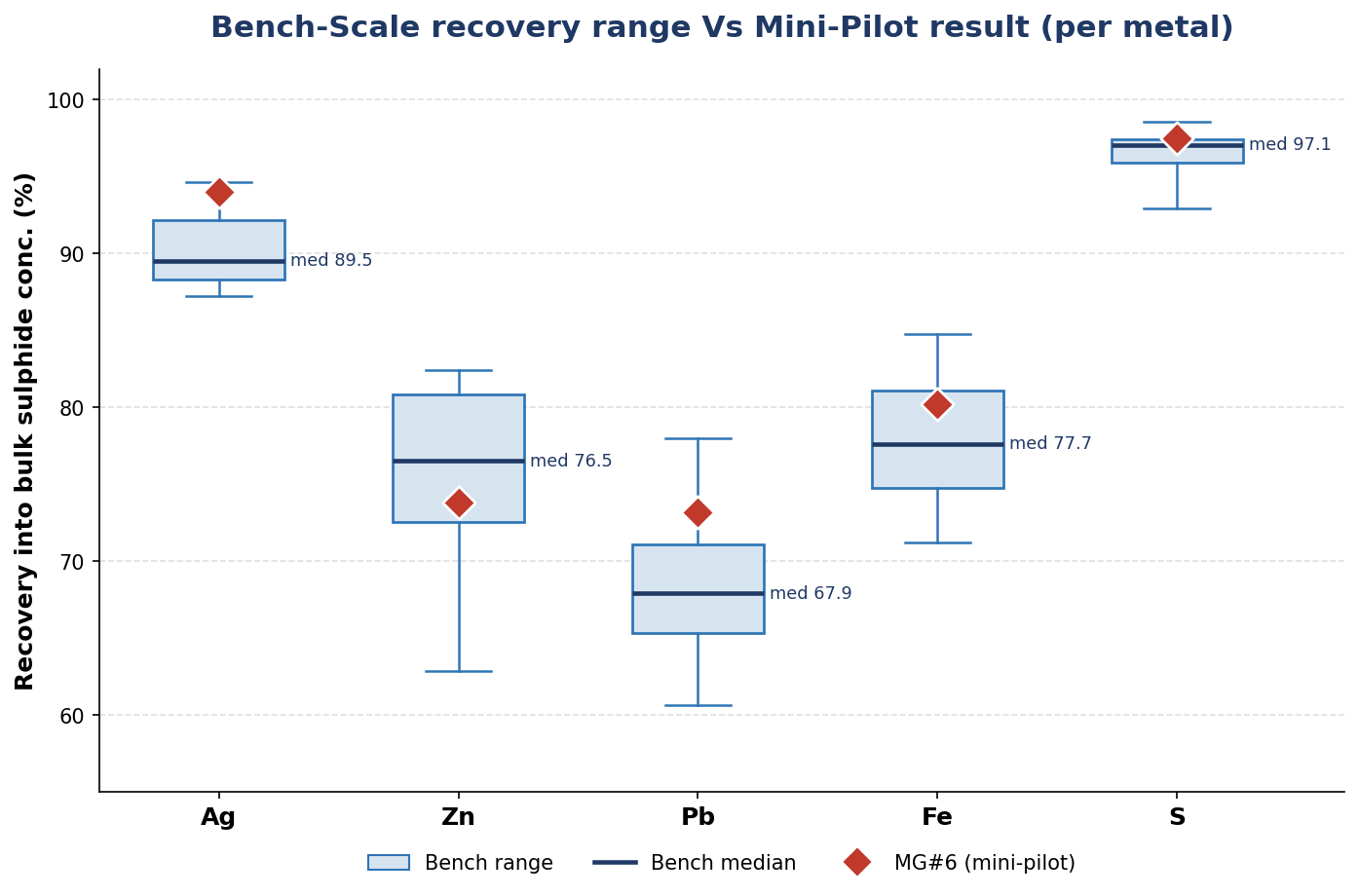
Figure 3: Box plots of recovery range per metal from selected bench-scale test and mini-pilot results.
Mini-Pilot Plant Program
Building on extensive bench-scale work, the Company completed a mini-pilot plant campaign at SGS Santiago, Chile, using an approximately 12-tonne bulk sample of Quiulacocha tailings collected from a test pit in December 2025 / January 2026 (see Figure 7. Location map). The mini-pilot plant was operated over multiple continuous 10–12-hour shifts, with feed, concentrate and tails streams subjected to TIMA quantitative mineralogy and full geochemical assay (Figure 4).
Headline Mini-Pilot Plant Results
Results below relate to the bulk sample tested and are not representative of the whole tailings.
- Greater than 92.5% of total sulphides recovered into the bulk sulphide concentrate.
- Approximately 73% of zinc reported to the bulk concentrate.
- 94% silver (lattice-bound and discrete) chemically reported to the bulk concentrate.
- Final concentrate is mineralogically more than 90% pyrite (mainly pyrite with traces of pyrrhotite and arsenopyrite) — a strong base from which to generate either a high-purity pyrite product or to apply secondary base metal upgrading.
- Greater than 94% of gangue minerals rejected to the final tails and only approximately 4% residual pyrite — indicating potential for reduced acid-generation, subject to further test work.
Subsequent stages of the SGS program, currently being run through additional 12-hour shifts, are evaluating the separation of base metals (zinc, lead, copper and silver) from the bulk sulphide concentrate, and the conditions required to deliver pyrite concentrate purities of 90–95% with combined low zinc-plus-lead concentration, typically sought by sulphuric-acid producers, including characterization and management of minor deleterious elements to meet requirements.
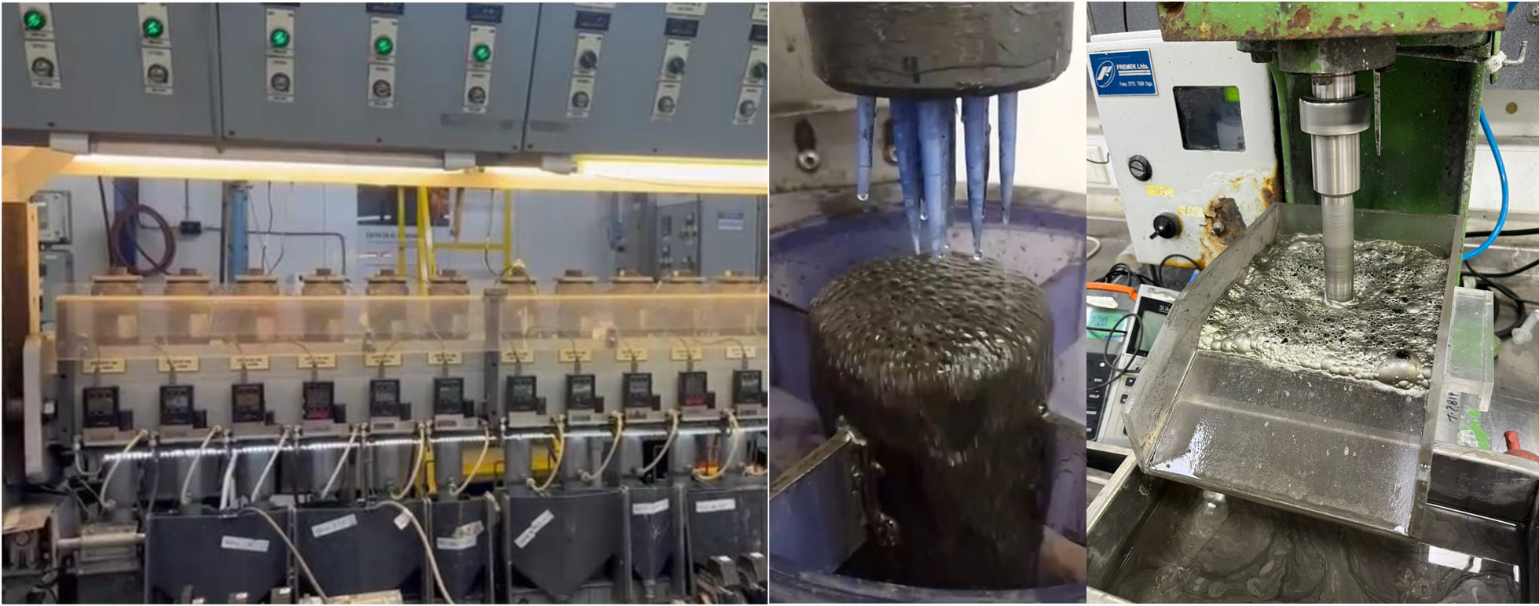
Figure 4: Photos of the Mini-Pilot Plant at SGS Chile with mechanical cells (left) and column cell (centre), and bulk-sulphide flotation test (right)
Pyrite: A Potential Sulphur Resource for Fertilizer and Industrial Markets
The high pyrite content of the Quiulacocha tailings drilled in 2024, originally regarded as a metallurgical challenge, has emerged as one of the project’s potentially attractive features. Globally, the sulphur market is undergoing a structural shift. Traditional sources of elemental sulphur, principally a by-product of oil refining and natural gas processing, have been declining as the hydrocarbon industry transitions, while demand from the phosphate-fertilizer sector and industrial chemicals continues to grow (Figure 5). According to commodity market reporting in April 2026, export restrictions on sulphuric acid from China — the largest producing and exporting jurisdiction — combined with sulphur supply disruptions linked to conflict in the Middle East, have contributed to elevated sulphuric acid pricing and increased focus on alternative sulphur-bearing feedstocks.
In this environment, high-quality pyrite concentrate is being evaluated as a potential alternative feedstock. Pyrite can be roasted to produce sulphur dioxide for sulphuric-acid manufacture, while also generating a precious-metal-bearing calcine from which silver and other metals may potentially be recovered. The Company has had initial discussions with multiple parties regarding the potential supply of pyrite concentrate for sulphuric acid and related industrial applications. These discussions are preliminary and non-binding, and there is no assurance that they will result in any agreement, sale or revenue.
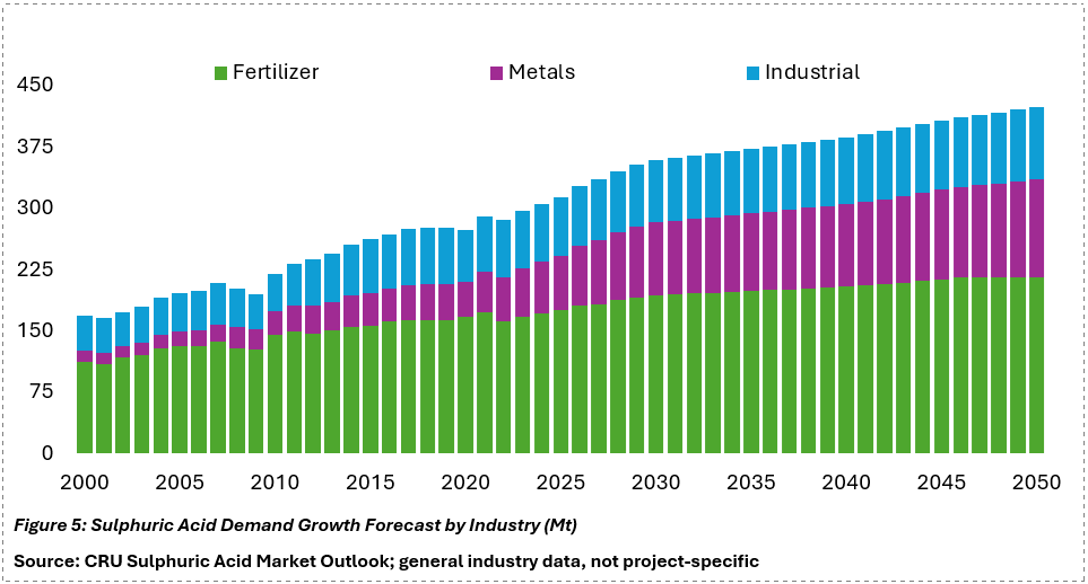
Figure 5: Sulphuric Acid Demand Growth Forecast by Industry (Mt)
Source: CRU Sulphuric Acid Market Outlook; general industry data, not project-specific
The city of Cerro de Pasco is served by an established rail network (Ferrocarril Central Andino), providing a path for large-tonnage product transport direct to the coast for ocean freight. The Port of Callao near Lima is a major deep-water port facility, with significant bulk export capacity.
Further Test Work and Next Steps
The current metallurgical program is comprehensive and multi-laboratory. The Company expects to complete the following workstreams over the coming months, which will de-risk the conceptual flowsheet and inform engineering trade-off studies:
- Further optimization work on mini-plant: Separation of base metals from the bulk sulphide concentrate and generation of cleaned pyrite concentrate samples for downstream evaluation.
- Fine-grain flotation technology evaluation: Comparative bench-scale test work focused on flowsheet validation, fine-grained sulphide recovery, with results expected to inform a fine-particle flotation strategy.
- Roasting and leaching test work: Pyrite roasting trials and calcine leaching programs at two commercial laboratories to test downstream metals recovery from the pyrite concentrate, including silver and base metals. These programs are designed to investigate the final metal splits between the two concentrates and the potential payable metal content of each product — the parameters required for future technical studies and economic evaluations of the Project.
- Gallium: Targeted exploratory metallurgical programs aiming to concentrate gallium through selective or reverse flotation from the silicate fraction of the tails, and indium associated with the base metals and pyrite streams. A consolidated metallurgical update is anticipated in the second half of 2026. This will support advancement toward the Company’s first Mineral Resource Estimate and subsequent technical studies for the Quiulacocha Tailings Reprocessing Project.
Sample Provenance, Analytical Methods, and Quality Assurance
The samples referenced herein are from the Company’s 40-hole Phase 1 drilling campaign at Quiulacocha (August–October 2024, Figure 6 and Table 4) and a ~12-tonne bulk sample collected from one test pit excavated in December 2025 (Figure 7 and Table 4). Drilling, sample handling, geochemical assay laboratories (Inspectorate Services Perú S.A.C. / Bureau Veritas and SGS Lima) and the QA/QC programme (twin and pulp duplicates, certified reference materials, coarse blanks and second-laboratory check assays) were disclosed in the Company’s news releases dated October 15, 2024, March 19, 2025 and April 9, 2025, incorporated herein by reference and available on SEDAR+ at www.sedarplus.ca.
Geochemical work used multi-element ICP (60 elements), atomic absorption (upper-limit Zn, Pb, Cu) and fire assay for gold on 250 g riffle-split pulps prepared without crushing or grinding. Mineralogical work used TIMA and, on selected samples, Zeiss Mineralogic automated mineralogy, complemented by electron microprobe, sequential extraction, hydroseparation and LA-ICP-MS. Mineralogical quantification are not absolute values due to the nature of data acquisition and limitation for very fine particle fractions.
Metallurgical bench and mini-pilot work is being conducted principally at Plenge (Lima, Peru) and SGS (Santiago, Chile), respectively; initial mini-pilot work comprised six bulk-sulphide concentration runs, and subsequent selective base-metal separation runs are in progress.
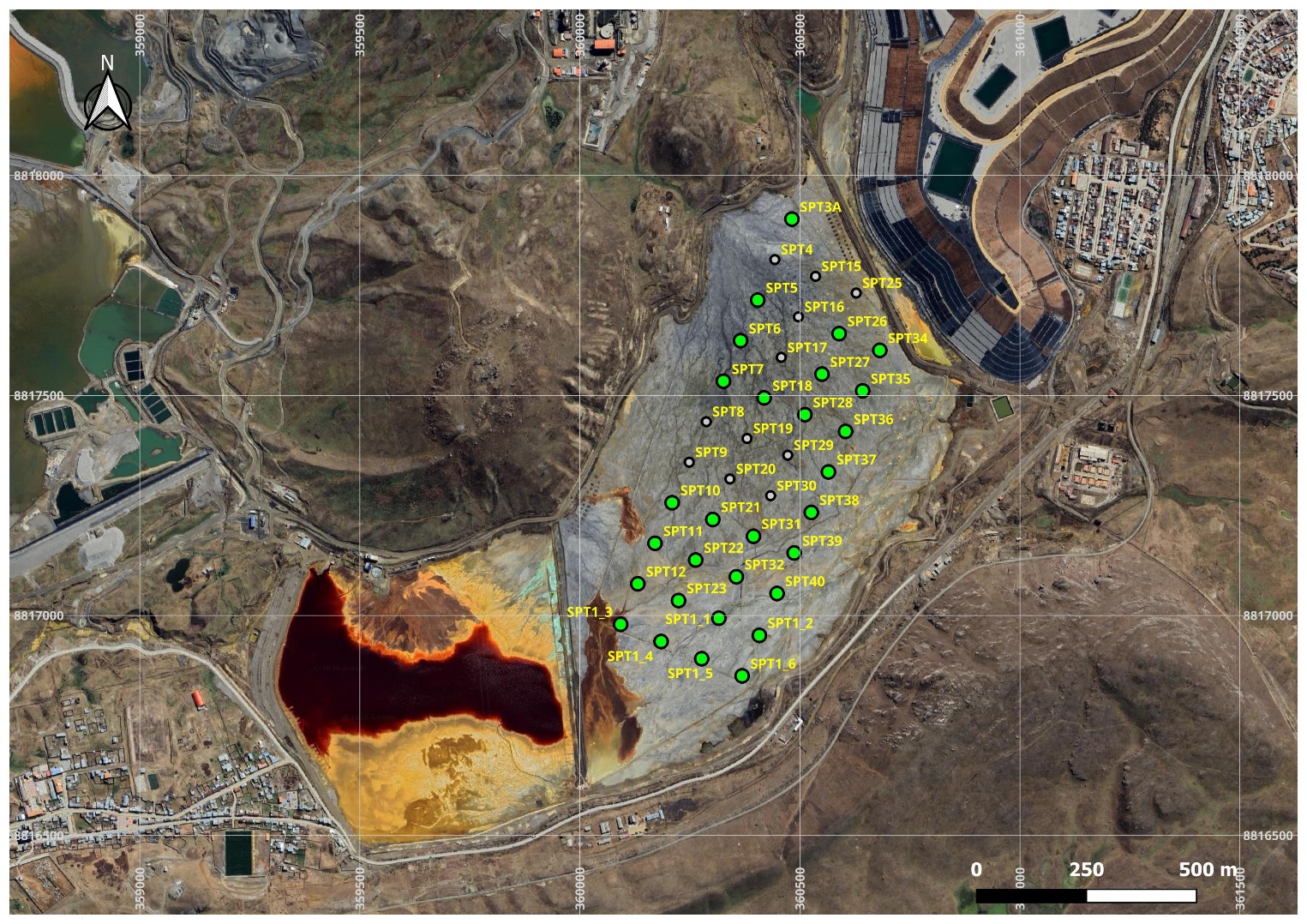
Figure 6: Drillholes highlighted in green were selected to generate the Phase-1 metallurgical composite for bench-scale test-work
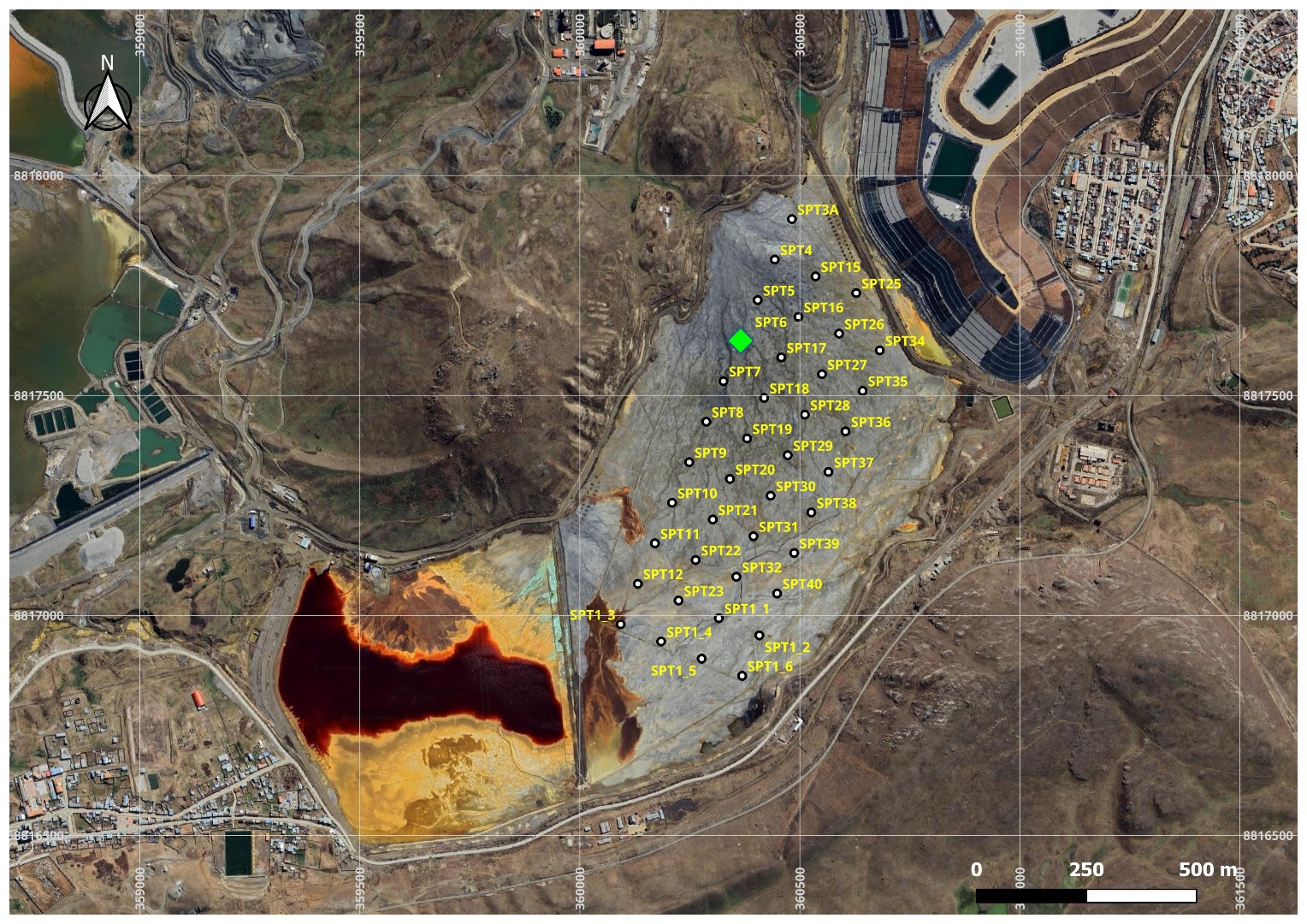
Figure 7: Location of the bulk sample collected from a test pit at drillhole SPT06 for mini-pilot metallurgical test-work
Table 4: Summary of metallurgical composites from Phase 1 drillholes and bulk sample from test pit
| Metallurgical Composite/Sample | Internal Coding | Number of Composited Samples | Ag (g/t) | % Zn | % Pb | % Cu | Ga (g/t) | % Fe |
| May 2025 | 25-00005-1-GM | 234 | 46.6 | 1.45 | 0.93 | 0.09 | 52.0 | 30.1 |
| January 2026 | 25-00008-1-GM | 265 | 48.5 | 1.48 | 0.97 | 0.09 | 45.6 | 30.8 |
| December 2025 | 26-000X-BK and B-1/139 | 1 bulk composite from test pit | 49.2 | 1.28 | 0.59 | 0.02 | 23 | 34.1 |
Qualified Person
Mr. Alfonso Palacio Castilla, MIMMM / Chartered Engineer (CEng) and Senior Project Manager for CDPR, has reviewed and approved the scientific and technical information contained in this news release. Mr. Palacio is a Qualified Person for the purposes of reporting in compliance with NI 43-101.
The QP has verified the underlying data, including the analytical methods and QA/QC of the referenced laboratories, and is not aware of any limitations affecting reliability.
Cautionary Note Regarding Mineral Disclosure
The Company has not established a mineral resource or mineral reserve for the Quiulacocha tailings in accordance with NI 43-101. The information disclosed herein relates to mineralogical characterization and exploratory metallurgical test work on specific samples and composites (including the ~12-tonne bulk sample treated at SGS Santiago) and does not constitute disclosure of a current mineral resource or mineral reserve. Recoveries, concentrate characteristics and other results relate to the specific samples tested, are based on a limited number of bench-scale and mini-pilot runs, and may not be representative of the deposit as a whole or reproducible at larger scale. Indicative product characteristics are exploratory targets subject to further test work, completion of Phase 2 drilling and resource-definition, establishment of an NI 43-101 compliant mineral resource estimate, future technical studies, and the obtaining of all required permits and surface rights.
About Cerro de Pasco Resources
Cerro de Pasco Resources Inc. is focused on developing its 100%-owned El Metalurgista mining concession in central Peru, which hosts silver-rich tailings and stockpiles accumulated over more than a century of mining in one of the most prolific polymetallic districts in the Americas. The Company’s strategy is to reprocess historic mining waste to recover value while addressing the long-term environmental liabilities associated with these tailings.
For more information, please visit www.pascoresources.com.
Further Information
Donna Yoshimatsu, VP Investor Relations
Mobile: +1 416-722-2456
Email: dyoshi@pascoresources.com
Forward-Looking Statements
Certain information contained herein may constitute “forward-looking information” under Canadian securities legislation. Generally, forward-looking information can be identified using forward-looking terminology such as “plans”, “seeks”, “expects”, “estimates”, “intends”, “anticipates”, “believes”, “could”, “might”, “likely”, “scheduled” or variations of such words or statements that certain actions, events or results “may”, “will”, “could”, “would”, “might”, “will be taken”, “occur”, “be achieved” or other similar expressions. The Company has not established a mineral resource or mineral reserve for the Quiulacocha tailings in accordance with NI 43-101. The mineralogical, metallurgical and pilot-scale test work referred to in this news release is exploratory in nature, relates to specific samples and composites tested to date and may not be reproduced at larger scale or be representative of the deposit as a whole. Ongoing drilling, assay, metallurgical and related technical work are intended to support a first Mineral Resource Estimate and future technical studies; there can be no assurance that any such estimate or study will be completed or, if completed, that it will support the advancement of the project. Forward-looking statements, including the expectations of CDPR’s management regarding the advancement, timing, scope and completion of the integrated metallurgical test program at the Quiulacocha Tailings Reprocessing Project; the anticipated timing, content and results of further metallurgical, mineralogical and pilot-scale test work; the expected characteristics, marketability and pricing of the contemplated pyrite concentrate and mixed base metal concentrate; the global outlook for sulphur, sulphuric acid and pyrite as alternative feedstocks; the preparation, timing and potential results of the first Mineral Resource Estimate for the Quiulacocha tailings; and the expected benefits of tailings reprocessing, are based on CDPR’s estimates and are subject to known and unknown risks, uncertainties and other factors that may cause the actual results, level of activity, performance or achievements of CDPR to be materially different from those expressed or implied by such forward-looking statements or forward-looking information. Forward-looking statements are subject to business and economic factors and uncertainties and other factors, that could cause actual results to differ materially from these forward-looking statements, including the relevant assumptions and risk factors set out in CDPR’s public documents, available on SEDAR+ at www.sedarplus.ca. There can be no assurance that such statements will prove to be accurate, as actual results and future events could differ materially from those anticipated in such statements. Although CDPR believes that the assumptions and factors used in preparing the forward-looking statements are reasonable, undue reliance should not be placed on these statements and forward-looking information. Except where required by applicable law, CDPR disclaims any intention or obligation to update or revise any forward-looking statement, whether as a result of new information, future events or otherwise.
Neither the TSX Venture Exchange nor its Regulation Services Provider (as that term is defined in the policies of the TSXV) accepts responsibility for the adequacy or accuracy of this news release.
Photos accompanying this announcement are available at:
https://www.globenewswire.com/NewsRoom/AttachmentNg/a22b87fd-6a64-422b-a6a9-6938d72c3b84
https://www.globenewswire.com/NewsRoom/AttachmentNg/93b8fc6f-a7ab-4c47-a71b-6027010dcd31
https://www.globenewswire.com/NewsRoom/AttachmentNg/ea8cf6dd-05ce-4de7-8977-39673d74e8d2
https://www.globenewswire.com/NewsRoom/AttachmentNg/c89ecd8d-32e7-4238-8ed0-29db54573f01
https://www.globenewswire.com/NewsRoom/AttachmentNg/77c0f1ab-86a4-477a-96b4-77146d7faaeb
https://www.globenewswire.com/NewsRoom/AttachmentNg/a555d899-44d9-4c13-a215-a2a157f43089
https://www.globenewswire.com/NewsRoom/AttachmentNg/56c24261-7b3b-4b4a-bb8a-9b4ab4467a88