
CHARLOTTE, NC – X-Sense highlights the growing need for whole-home protection as fire behavior in modern households becomes increasingly unpredictable.
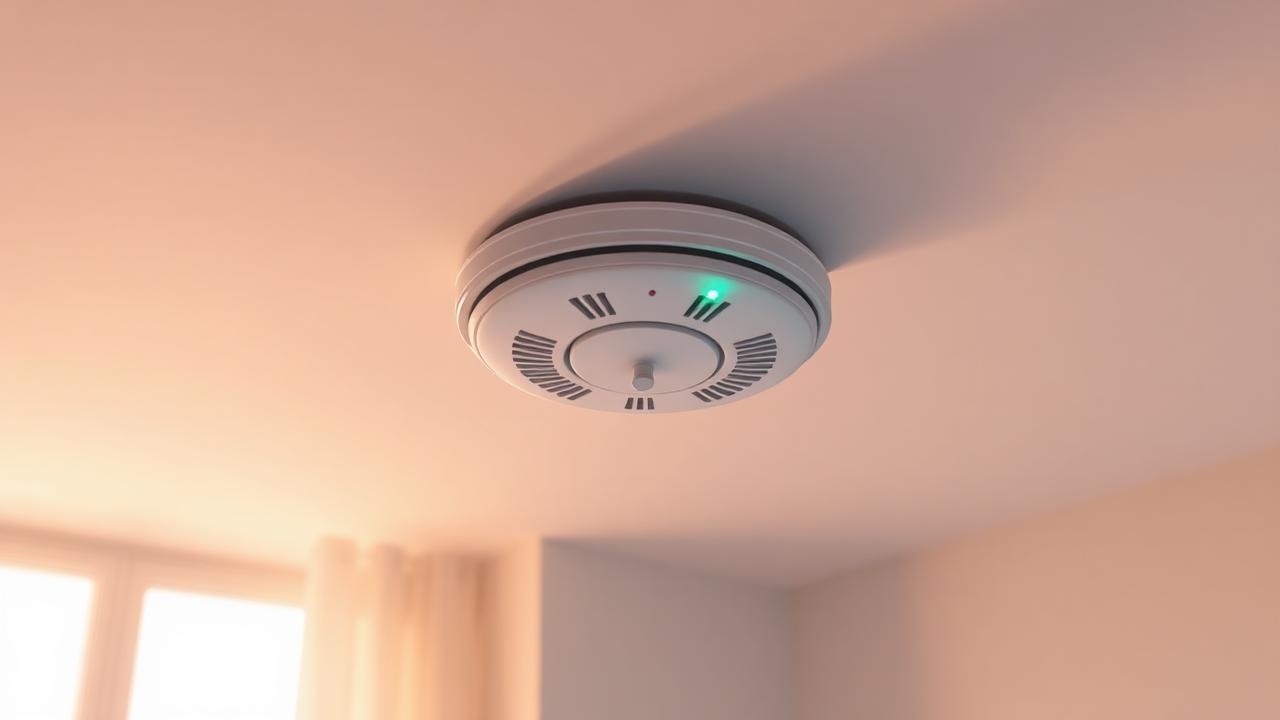
A large number of people have a smoke alarm in their home. It is attached to the ceiling, beeps when the battery fails, and sits in oblivion until toast is burned or toasted. That’s honestly how it goes in a lot of households, and it’s also why house fires still kill people who technically have working alarms installed.
The device alone is not the safety plan. Where you put it, how you maintain it, and whether the whole system actually works together, that’s the part most homeowners skip.
Placement Is Where Most People Get It Wrong
There are two typical mistakes regarding smoke alarm setup. One is installing an alarm in the middle of a hallway and using it as the sole alarm. The second is placing it near the kitchen area, where routine cooking steam and grease ignite the fire on the alarm, and thus the owner removes the battery or turns off the alarm altogether.
The advice of the fire safety organisations is to fit alarms in each bedroom, outside each sleeping space, and on each floor of the house, including in the garden room and basement. If you have someone sleeping by a closed door, you can’t get a hold of them in time with an alarm in the building hallway. This isn’t a theoretical scenario, but rather what has been shown in many residential fire deaths.
High ceilings require placing the alarm within 30 centimetres of the ceiling, not flat against it, since that’s where dead air pockets form. Avoid installing near windows, doors, or air vents where airflow might interfere with detection. If you’re shopping for a unit, X-Sense has a solid range of smoke detectors with options for both standalone and interconnected setups worth browsing if you’re starting from scratch or replacing aging units.
Testing and Battery Replacement
Don’t use a smoke alarm as a decoration; it must be tested. Most detectors will have a test button — pressing this will confirm that the siren is working, but not necessarily indicate that the sensor is in good condition.
Replace batteries annually or as needed. It can help to link it to another cue you already have in your mind, such as a change of the seasons, a public holiday, etc. When the batteries in your alarm are sealed and are lithium-type, there is no need to change them every year. The units have a potential lifetime of 10 years until the whole unit is replaced. One of the useful features of sealed-battery models is that there are fewer excuses to tune out of the alarm and fewer instances of the detector resting with the battery taken out of it.
Detectors are not forever, either. Detectors, like all things else on Earth, have a lifespan, too. After ten years, the device gets old and needs to be replaced, even if it still reacts upon pressing the test button.
Interconnected Systems Make a Real Difference
A stand-alone alarm is one of their drawbacks in a large home — bedrooms on the upper level might not hear it if the event occurs in the basement. A system that’s interconnected resolves this issue by joining each alarm together throughout the house, and if an alarm senses a fire, all of them will sound at once.
In some older connected systems, hardwiring the connections required the structures to be newly built or built extensively. With advances in wireless interconnection technology, this is now available to homeowners who want to install the technology without opening up their walls. Analysis of the industry conducted in 2026 has identified the need for millions of homes to continue to use stand-alone detectors, with fire safety experts increasingly identifying that the single-detector installation is a significant disadvantage in relation to alerting occupants in larger or multi-storey homes.
For households in that situation, the X-SENSE XS0B-MR interconnected smart smoke alarm is a practical option. It uses RF wireless interconnection, so every alarm in the network triggers together, and it also sends real-time app alerts identifying exactly which room the alarm activated in, which is useful if you’re away from home or if the house is large enough that sound alone isn’t reliable.
Carbon Monoxide: The Alarm You Might Not Have
Fire gets most of the attention, but carbon monoxide is responsible for a significant number of residential deaths each year, and it’s entirely odourless. You cannot detect it without a sensor.
If you have gas appliances, a wood-burning fireplace, an attached garage, or oil heating, consider installing a CO detector in your home. The placement rules are slightly different for carbon monoxide than for smoke alarms: CO is about the same density as air and most evenly distributed around a room, so it is satisfactory in most installations to incorporate it in a mid-wall area at around head height. Ensure it is not near the boiler or gas cooker, as traces of CO may be produced during its normal working.
A combination alarm — a smoke and CO alarm made in a single housing unit — is a smart choice for homes wanting fewer alarm devices while maintaining adequate coverage. They’re also a good option for rental homes since they have to meet both smoke and CO codes at the same time.
A Few Things That Are Surprisingly Common
Some homeowners remove the alarm battery during cooking and forget to put it back. Others have alarms that haven’t been tested in years. A growing number of units are installed only outside the kitchen when the guidance is clear about coverage inside every bedroom.
It’s also common for renters to assume the landlord has handled it. In the UK and many US states, landlords have legal obligations around smoke and CO alarm installation, but whether those alarms are tested, battery-maintained, and in working condition on any given day is something worth confirming personally rather than assuming.
The Maintenance Habit Worth Building
Twice a year, walk through the house and test every alarm. Check the battery age. Look at the manufacture date on the back of the unit. If it’s approaching a decade old, budget for replacements. Write down where every alarm is located so you know whether there are gaps in coverage.
It takes twenty minutes and costs nothing if everything is in order. Smoke alarms are one of those things that work perfectly until they don’t, and when they don’t, the window for it to matter can be very short.
About X-SENSE Innovations
Founded in 2013, X-SENSE Innovations operates from its registered U.S. address at X-SENSE USA LLC, 1209 Orange St, Wilmington, DE 19801, and specializes in developing certified home fire and safety solutions for both residential and commercial environments. The company focuses on producing professional and user-friendly safety devices, including domestic fire alarms such as smoke, carbon monoxide, and heat alarms, as well as smart home safety systems covering fire protection, intrusion detection, and indoor environment monitoring.
More information is available at www.x-sense.com.
Official company social media profiles: Facebook and Instagram.
Media Detail
Contact Person Name: Farrukh
Company Name: X-Sense
Email: service@x-sense.com
Website: https://www.x-sense.com/
Phone: +1 (833) 952-1880


