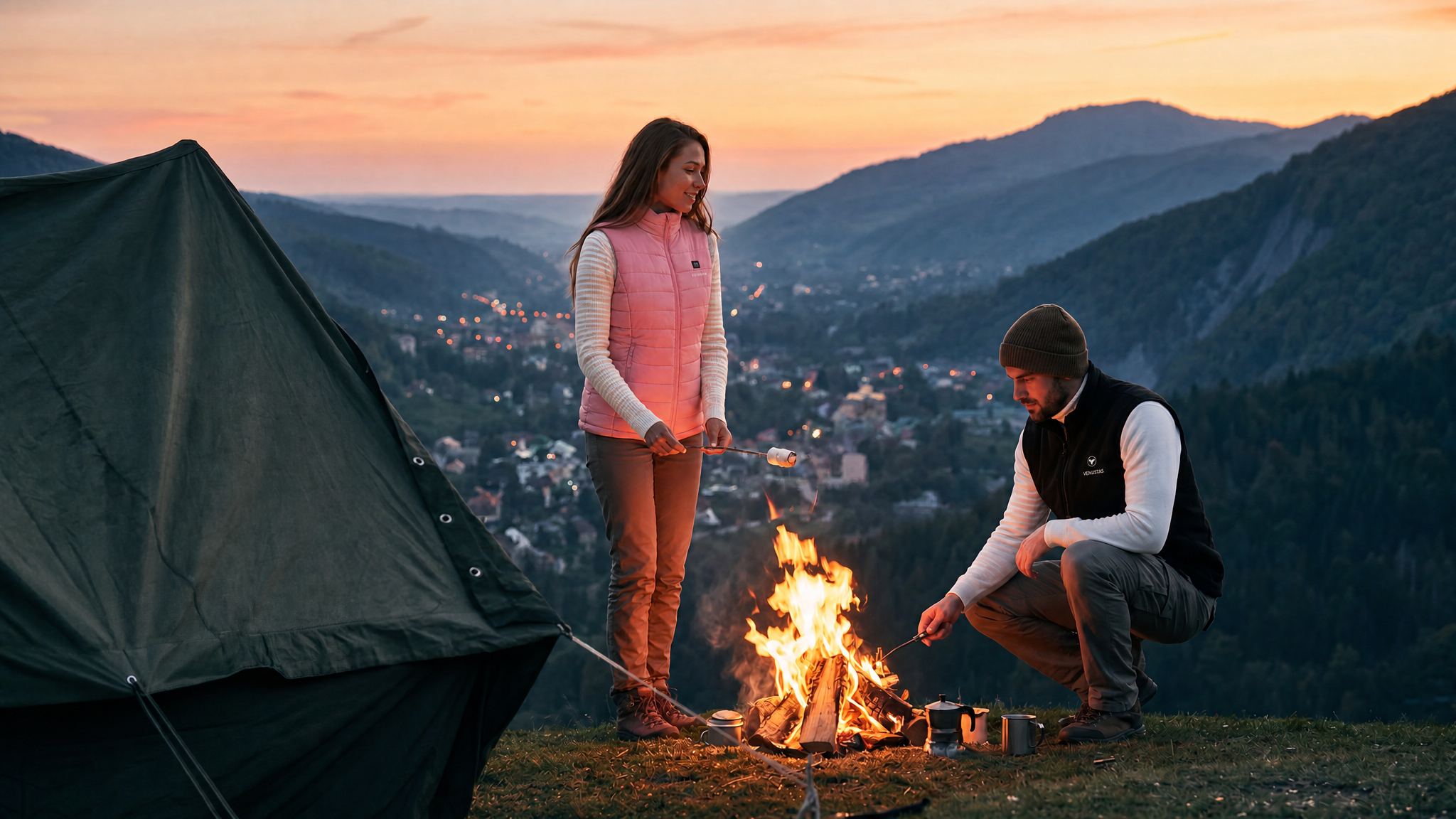
Venustas highlights how temperature fluctuations, air-conditioned spaces, and elevation changes are driving summer use of heated apparel.
LOS ANGELES, CA, UNITED STATES, June 25, 2026 /EINPresswire.com/ — While heated apparel is traditionally associated with winter conditions, temperature fluctuations during summer continue to create situations where lightweight heated layers remain useful. From heavily air-conditioned indoor environments to cooler evenings and higher-elevation destinations, seasonal comfort is often influenced by more than outdoor daytime temperatures.
According to Venustas, changing temperature conditions throughout the day are contributing to the continued use of heated vests and other heated apparel beyond the winter season.
Summer Conditions Are Not Always Consistently Warm
Although summer is generally characterized by higher temperatures, daily conditions can vary significantly depending on location, time of day, and environment.
According to National Weather Service and NOAA climate data, summer temperatures in many parts of the United States commonly decrease by 15 to 30°F between daytime highs and nighttime lows. These shifts are often most noticeable during early mornings and evenings, when outdoor activities such as camping, hiking, fishing, and outdoor gatherings frequently take place.
As a result, lightweight layering remains a common approach to maintaining comfort during changing summer conditions.
Indoor Cooling and Elevation Changes Add to Temperature Variability
Outdoor temperatures are only one part of the equation. Indoor environments can create equally noticeable temperature differences during the summer months.
The U.S. Department of Energy recommends setting air conditioning at 78°F for energy efficiency, yet many offices, airports, retail spaces, and other commercial environments are typically maintained at approximately 68 to 72°F. For commuters, travelers, and office workers, moving repeatedly between outdoor heat and cooler indoor spaces can create recurring comfort challenges throughout the day.
Elevation changes can also contribute to shifting conditions. Standard meteorological measurements indicate that temperature decreases by approximately 3.5°F for every 1,000 feet of elevation gain. As a result, mountain destinations, scenic drives, hiking trails, and other elevated locations often experience noticeably cooler temperatures than nearby lowland areas.
These factors can create multiple temperature transitions within a single day, particularly during travel and outdoor recreation.
Heated Apparel Finds a Role Beyond Cold Weather
As temperature variability becomes a consideration across a wider range of environments, heated apparel is increasingly being viewed as more than a winter-specific product category.
Rather than serving solely as protection against extreme cold, lightweight heated apparel can function as an adaptable layering option for situations where temperatures change throughout the day. 3 adjustable heat settings allow users to customize warmth levels based on their surroundings, whether transitioning between air-conditioned indoor spaces, traveling to higher-elevation destinations, or participating in outdoor activities that extend into cooler morning and evening hours.
According to Venustas, these usage patterns reflect a broader shift toward year-round comfort solutions designed to accommodate changing environments rather than a single season.
How Heated Apparel Works
Heated apparel uses built-in heating elements powered by rechargeable battery packs to provide warmth directly to key areas of the body. Unlike traditional layering alone, heated garments allow users to actively adjust warmth levels based on changing environmental conditions.
Many modern heated vests and jackets feature multiple temperature settings, enabling users to increase or decrease heat output throughout the day. This flexibility can be particularly useful when moving between outdoor heat, air-conditioned indoor spaces, and cooler morning or evening conditions.
As a result, heated apparel is increasingly being used as an adaptable comfort layer rather than solely as cold-weather gear.
About Venustas
Venustas designs heated apparel for changing indoor and outdoor environments throughout the year. The company’s products combine lightweight garment construction with rechargeable battery-powered heating technology and adjustable temperature settings, helping users maintain comfort across commuting, travel, outdoor recreation, and everyday activities.
For more information, visit the Venustas official website.
Media inquiries: cooperation@venustas.com
Venustas Marketing
Venustas Heated Apparel
marketing@venustas.com
Visit us on social media:
LinkedIn
Instagram
Facebook
YouTube
TikTok
X
Legal Disclaimer:
EIN Presswire provides this news content “as is” without warranty of any kind. We do not accept any responsibility or liability
for the accuracy, content, images, videos, licenses, completeness, legality, or reliability of the information contained in this
article. If you have any complaints or copyright issues related to this article, kindly contact the author above.

Media gallery