
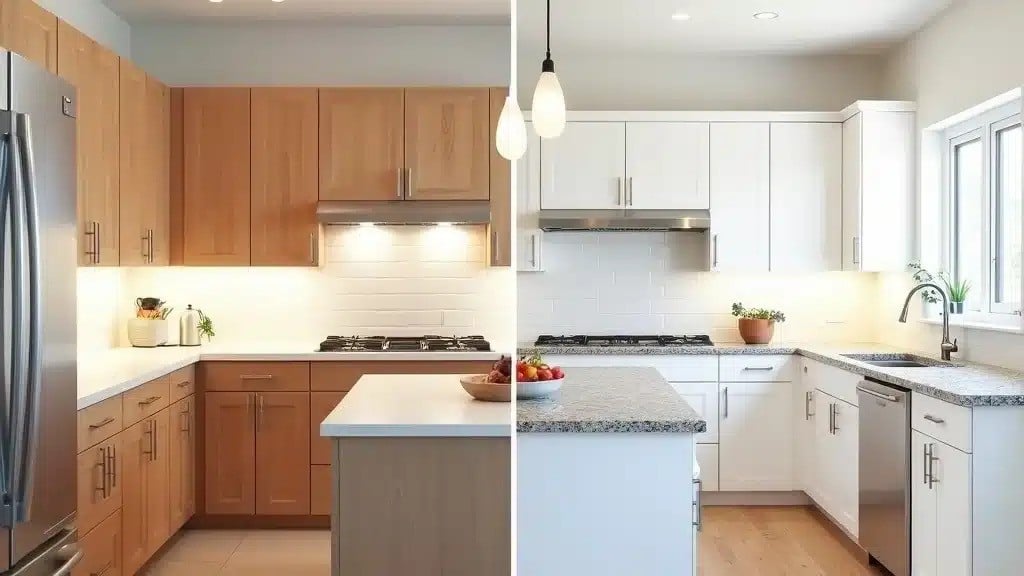
Key Takeaways
- Professional cabinet painting typically costs 70 to 90 percent less than full cabinet replacement, with an average kitchen running between $5,000 and $9,000
- Painting a kitchen’s cabinets usually takes just 3 to 7 days with the kitchen still usable, while full replacement can shut down a kitchen for 6 to 12 weeks
- Whether painting or replacement makes more sense depends largely on how sound the existing cabinet boxes actually are
- Quality painted cabinets can last 7 to 12 years and often return 60 to 80 percent of their cost when a home is sold
- Painting existing cabinets reduces landfill waste compared to tearing out and replacing an entire kitchen’s worth of cabinetry
Choosing between painting kitchen cabinets and replacing them entirely comes down to a few practical questions: how much can be spent, how long can the kitchen be out of commission, and whether the existing cabinets are still in good shape. For most homeowners with solid cabinet boxes, painting delivers a dramatic transformation without the price tag or the weeks of chaos that come with a full teardown. The Painting Pros, a San Jose area painting contractor based in Los Gatos and serving South Bay and Santa Cruz County, breaks down the cost, timeline, durability, and environmental differences between painting and replacing cabinets so the right choice becomes clear.
Painting Costs 70-90% Less Than Replacement
Money is usually the first thing homeowners think about when a kitchen starts to look tired, and the gap between painting and replacing is hard to ignore. Professional cabinet painting for an average kitchen typically runs between $5,000 and $9,000, a figure that covers prep work, primer, paint, and putting all the hardware back where it belongs.
Full cabinet replacement tells a very different story. Basic stock cabinets start around $3,200, while semi-custom or custom options can push past $20,000 before anything else is factored in. Once a kitchen remodel includes new countertops, a backsplash, and updated appliances, the total project cost can climb beyond $60,000. Painting costs 70 to 90 percent less than replacement, which means a painted kitchen often lands at roughly one-tenth the price of starting over completely. For anyone trying to stretch a renovation budget further, that difference alone makes painting worth serious consideration, explains The Painting Pros.
Days vs. Weeks: Comparing Timelines
Cost is only half the equation. The other half is time, and specifically, how long a kitchen will be out of commission while the work gets done.
Painting Takes 3 to 7 Days With a Usable Kitchen
A professional cabinet painting project typically wraps up in 3 to 7 days. During that window, the kitchen generally stays usable, which matters a great deal for households that rely on their kitchen every single day. Crews usually work in sections, clearing space as they finish so meals can still happen around the project. The disruption is short, but the visual payoff is significant.
Replacement Can Take 6 to 12 Weeks of Disruption
Full cabinet replacement stretches the timeline considerably. Between demolition, ordering, delivery, and installation, the process can take 6 to 12 weeks, and the kitchen is largely unusable for most of it. Plumbing and electrical adjustments, countertop fitting, and backsplash work all tend to depend on one another, so delays in one step push back everything after it. For a family that cooks at home regularly, losing a kitchen for two or three months is a significant lifestyle disruption.
Is Painting Right for Your Cabinets?
Not every kitchen is a good fit for a paint job, and knowing the difference ahead of time saves both money and frustration down the road.
Structurally Sound Boxes Make Painting Viable
When cabinet boxes are structurally sound, meaning there is no major water damage, rot, or warping in the doors, painting is a genuinely viable path forward. A quick check is simple: open a few doors and drawers, feel for solid wood, and make sure hinges and slides move smoothly. When everything checks out, a fresh coat of cabinet-grade paint can completely change the look of a kitchen without touching the underlying structure. Cabinet-grade paint is built specifically to handle the daily wear kitchens dish out, which sets it apart from standard wall paint.
When Damage or Layout Changes Demand Replacement
Painting cannot fix every problem. Cabinets with water damage, warped frames, rot, or hinges that can no longer be repaired need to be replaced, since paint only covers the surface and does nothing for structural issues underneath. Replacement also becomes the better route when a homeowner wants a different kitchen layout, more counter space, or built-in features like soft-close drawers and custom organizers. Painting refreshes what already exists, while leaving the footprint and function of the kitchen unchanged.
Durability and Resale Value
Once the decision to paint is made, the next natural question is how long the results will hold up and whether the investment pays off.
How Long Painted Cabinets Really Last
Quality painted cabinets can last 7 to 12 years in a typical household, with proper surface preparation playing a huge role in that lifespan. High-traffic areas, like around handles and the bottom edges of doors, tend to show the first signs of wear. Routine care and the occasional touch-up help painted finishes go the distance, and choosing cabinet-grade paint over a standard interior paint makes a measurable difference in how well the finish resists chipping and fading over time.
A 60-80% Return on Investment When Selling
For anyone thinking about selling in the near future, painted cabinets deliver a return on investment of 60 to 80 percent. Freshly painted cabinets photograph well and give buyers an immediate sense that the kitchen has been cared for, often without the visual red flags that come with dated hardware or worn finishes. That combination of low upfront cost and strong resale appeal makes painting a smart move for sellers who want to boost showing appeal without overspending on a renovation they will not personally enjoy for long.
The Greener Choice for Your Kitchen
Cost and timeline aside, there is an environmental angle worth considering. Painting existing cabinets keeps usable materials out of the landfill, since the boxes, doors, and drawer fronts all stay right where they are instead of being torn out and hauled away. Full replacement, by contrast, generates a substantial amount of waste, from the discarded cabinets themselves to the packaging and offcuts that come with new installations. Manufacturing new cabinets also requires harvesting wood and running energy-intensive production and transportation processes, adding to the overall footprint of a replacement project. For homeowners who care about sustainability as much as style, painting provides a way to refresh a kitchen while leaving a smaller mark on the environment.
Where Refacing Fits Between Painting and Replacement
Cabinet refacing sits in the middle ground between painting and full replacement. It involves swapping out the doors and drawer fronts while keeping the existing boxes in place, giving a kitchen a more dramatic hardware change than paint alone can offer. Refacing typically costs more than painting but less than a complete replacement, generally falling somewhere in the $10,000 to $15,000 range. It can be a reasonable option for homeowners who want new door styles or materials but do not need to change their kitchen’s layout, though it comes at a noticeably higher cost than a professional paint job.
Why DIY Painting Falls Short
Painting cabinets might look like a weekend project, but the results rarely match what a professional crew can deliver. DIY attempts often run into trouble in a few predictable ways:
- Improper surface preparation, which leads to peeling and chipping far sooner than expected
- Uneven paint application that leaves brush marks or inconsistent coverage
- Choosing the wrong type of paint, since standard wall paint does not hold up to the daily abuse cabinets endure
Professional preparation includes thorough sanding, filling imperfections, priming correctly, and applying cabinet-grade paint in the right number of coats, usually with a sprayer for a smooth, factory-like finish. Getting hardware reinstalled properly, with hinges aligned and handles placed evenly, also makes a noticeable difference in how finished the result looks. These details are easy to overlook without experience, which is why professional results tend to last longer and look better than a DIY attempt.
Painting Wins When Cabinets Are Sound
When cabinet boxes are structurally sound, painting delivers on nearly every point a homeowner cares about: lower cost, a faster timeline, less disruption to daily life, and a smaller environmental footprint compared to tearing everything out and starting new. The Painting Pros point out that replacement still has its place for kitchens with real structural damage or homeowners who want a completely different layout, but for a simple refresh, painting is hard to beat on value.
Before deciding, take a close look at cabinet condition, set a realistic budget, and think about how long the kitchen can reasonably be out of use. Homeowners ready to move forward can look into professional cabinet painting options as a practical next step toward a refreshed kitchen with far less hassle than a full renovation.
The Painting Pros
14960 Los Gatos Blvd.
Los Gatos
CA
95032
United States


